
A 10-Year Quest for Freedom: What Playing Without a Shoulder Rest Taught Me About Violin Body Mechanics
Many people think of the violin as an instrument played solely with the hands. However, understanding true violin body mechanics is the ultimate secret to playing with complete artistic freedom. When working with the numerous advanced students and amateur violinists who visit my studio, the very first thing I emphasize is entirely different: "The violin is an instrument played with the entire body
As an Asian woman with shorter arms and smaller hands than the average person, trying to emulate these tall, long-limbed Western male virtuosos was, realistically speaking, an immense stretch. Yet, watching them play so immaculately without a shoulder rest ignited a strange, stubborn challenge within me: “I want to play without a shoulder rest, too.”
This fascination launched a decade-long personal journey. For the past ten years, I locked myself in the practice room, deeply researching body mechanics while practicing Ševčík, Dounis, and Vamous—completely stripped of a shoulder rest.
The Initial Taste of Freedom—and the Shifting Wall
Ditching the shoulder rest immediately yielded an incredible benefit: it granted total liberation to my shoulder’s deltoid muscle.
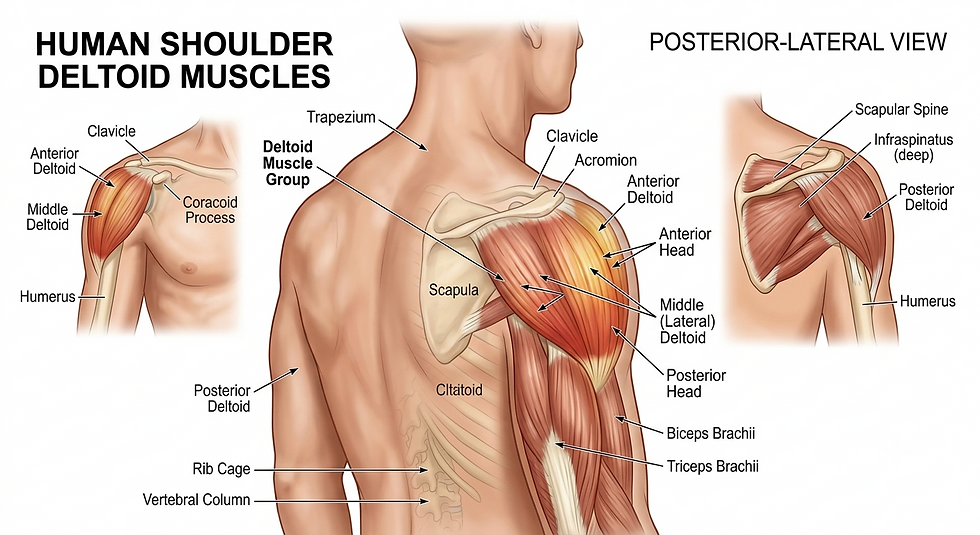
My shoulder pain completely vanished. Because my skeletal structure was no longer forced into a fixed posture, my body was freed from the "double duty" of having to rigidly brace the instrument while simultaneously trying to move it.
However, a major roadblock appeared whenever I initiated a shift. While navigating up to the 3rd position felt natural and comfortable, moving any higher caused my instrument holding to destabilize. The violin would slip, and I felt as though I was going to drop it.
This friction forced me to deeply analyze the specific arm movements required during shifting. I realized I had been drastically underestimating the role of the forearm, whose anatomical function is rotation (pronation and supination).

The Secret of Forearm Rotation and the Left Thumb
With my short arms and small hands, simply extending my fingers was not enough; I couldn't even execute a basic scale in the 1st position with ease. The crucial element I had entirely overlooked was that by the time I reached the 3rd and 4th fingers, my forearm already needed to be actively rotating.
For this forearm rotation to happen seamlessly, the left thumb must allow it. The moment you grip or squeeze the neck of the violin with your left thumb, the entire mechanical chain locks up.
The left hand resting on the neck should never act as a rigid clamp. Instead, it must function as a dynamic component of an overarching equilibrium. The instrument must be supported by constantly balancing the fine relationships between the left shoulder, the jawbone, the side of the neck, and the tactile friction created where the bow hair meets the string. These are the organic points of contact that stabilize the instrument without suffocating it.
Awakening the Senses: Why the Shoulder Rest Dulls Your Perception
Through this rigorous decade of self-experimentation with scales and etudes, I made a profound discovery: the very second you attach a shoulder rest, your physical awareness dulls.
A shoulder rest acts as an artificial crutch. Because you instinctively want to lean into it and rely on its structure, your nervous system tones down its ability to feel the subtle, micro-adjustments of your own bones and muscles. You lose touch with your kinesthetic sense.
By stripping away the rest and stripping down my technique to the raw skeletal mechanics, I was forced to awaken my body’s natural intelligence. I finally found the correct, aligned posture that honors my specific anatomy.
Violin playing is not about forcing your body to fit the instrument through sheer willpower or thick padding. It is an art of continuous balance, a dynamic conversation between your core and the strings. If you feel trapped by tension or hidden behind a rigid setup, perhaps it is time to put the shoulder rest aside, even just during your scales, and listen to what your body is truly trying to tell you.
Conclusion: An Invitation to Awaken Your Senses
To be absolutely clear, I am not writing this to argue that you must abandon your shoulder rest entirely. That is not my point.
However, if you wish to dive deeper into exploring your body's mechanics, if you want to cultivate a sharper awareness of your movements, or if you experience even a tiny amount of pain when you practice—I invite you to try this. Dedicate a portion of your practice time to playing without a shoulder rest. Spend time working through your scales, shifting, double stops, and technical exercises completely stripped of artificial padding.
Taking the time to bring a heightened, conscious awareness to how your body truly moves will prove to be an incredibly precious and rewarding experience. The moment you honor the perfect engineering of your body, your relationship with the violin will completely transform.
Comments